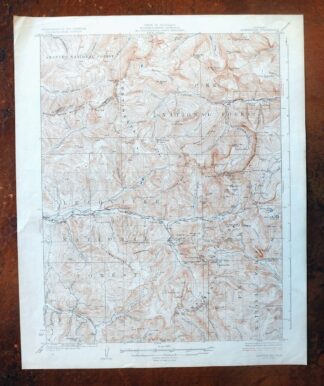
MAP DETAILS | |
|---|---|
| TITLE | Montezuma |
| STATE | Colorado |
| LOCATION | Vicinity of Keystone, 50 miles west of Denver |
| SERIES | 15-minute |
| SURVEYED | 1924 Field Survey |
| GEOGRAPHER | Albert Pike |
| EDITION | 1926 |
| PRINTED | 1926 |
| PRINT NOTES | Thick paper stock |
| SCALE | 1:62500 |
| CONTOUR INTERVAL | 50 feet |
| SHEET DIMENSIONS | 16 3/8 x 19 7/8 inches |
| MAP DIMENSIONS | 13 1/2 x 17 1/2 inches |
| COVERAGE AREA | 13 x 17 miles |
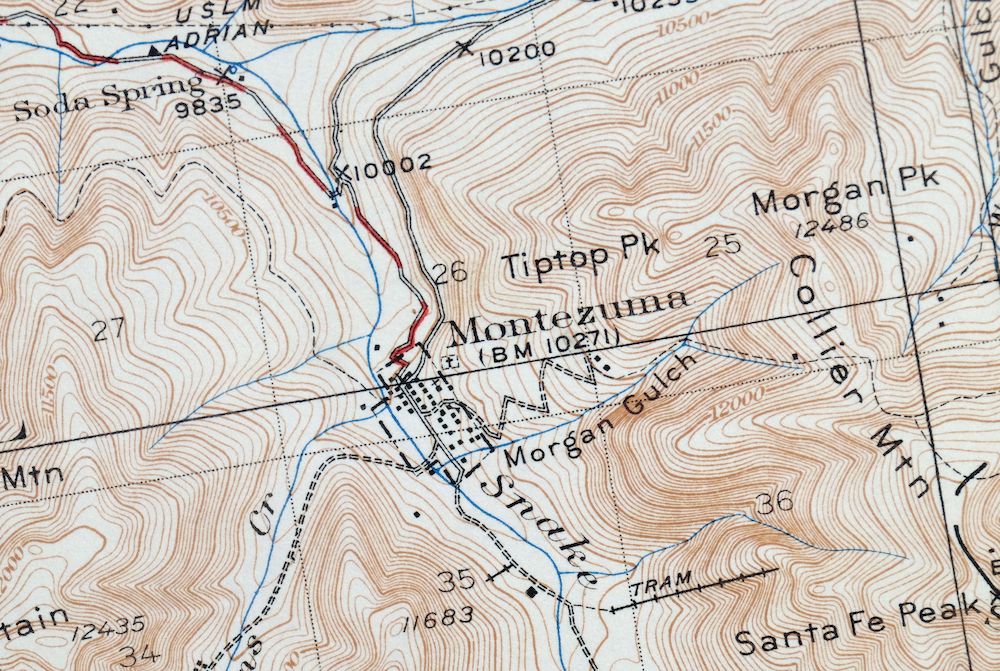
| MAP NOTES | An illuminating perspective of this rugged landscape before the existence of I-70, the Eisenhower Tunnel, and the ski resorts of Loveland, A-Basin, and Keystone. |
| SHEET CONDITION For maps of this vintage, effort is made to note all visible flaws, no matter how minor. | |
| OVERALL CONDITION | Very Good |
| SHEET NOTES | lightly handled, never folded, lightly age-toned paper |
| MAP AREA | no wear, no markings, very minor bleed-through blemish at Horseshoe Basin |
| COLLARS | no markings, repaired edge tear in left collar |
| MAP COVERAGE Quadrangle extent overlaid on current basemap. | |
| BACKSIDE LEGEND | |
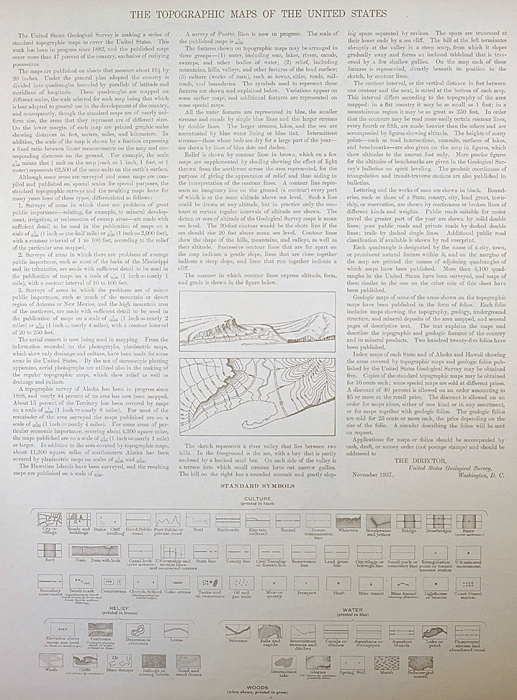 A map summary is printed on the back side of the Montezuma sheet similar to the one shown in the picture. It outlines the history, purpose, and status of the USGS mapping program at the time of the printing in 1926. It also provides instructions on how to read contour lines and a description of how they are used to depict the terrain. At the bottom of the page is a legend showing all of the symbols used to represent the cultural, relief, and water features found on the map. | |
| PLACENAMES Depending on map series and survey date, all of the features listed below may not be shown on this map. This list contains features that currently exist or historically existed within the area covered by the map. The list can be used as a reference to determine if this map covers your area of interest. Placenames are listed alphabetically next to each feature type. | |
| CITIES AND TOWNS (CURRENT) | Keystone and Montezuma |
| COUNTIES COVERED | Clear Creek, Grand, Park, and Summit |
| FEDERAL LAND UNITS | Arapaho National Forest, Pike National Forest, Ptarmigan Peak Wilderness, and Ptarmigan Peak Wilderness Study Area |
| RIVERS AND STREAMS | Bard Creek, Bobtail Creek, Burning Bear Creek, Clear Creek, Deer Creek, Geneva Creek, Leavenworth Creek, Middle Fork Williams Fork, North Fork Snake River, North Fork South Platte River, North Fork Swan River, Peru Creek, Quayle Creek, Ruby Creek, Saints John Creek, Short Creek, Snake River, Soda Creek, South Fork Williams Fork, Straight Creek, and Swan River |
| WATER BODIES | Hassell Lake, Herman Lake, Pass Lake, Reynolds Reservoir, Shelf Lake, and Silver Dollar Lake |
| Locations: Arapaho Basin Ski Area, Eisenhower Tunnel Point of Interest, Keystone Ski Area, Loveland Ski Area, and Pass Lake Picnic Area. Mountains, Peaks, and Summits: Argentine Peak, Baker Mountain, Bear Mountain, Bard Peak, Mount Bethel, Brewery Hill, Brittle Silver Mountain, Brown Mountain, Collier Mountain, Coon Hill, Cooper Mountain, Decatur Mountain, Mount Edwards, Engelmann Peak, Front Range, Ganley Mountain, Geneva Peak, Glacier Mountain, Grays Peak, Grizzly Peak, Hagar Mountain, Handcart Peak, Independence Mountain, Kelso Mountain, Landslide Peak, Lenawee Mountain, Mount Machebeuf, Morgan Peak, Mount Parnassus, Pendleton Mountain, Pettingell Peak, Porcupine Peak, Radical Hill, Red Cone, Revenue Mountain, Robeson Peak, Ruby Mountain, Santa Fe Peak, Silver Mountain, Silver Plume Mountain, Mount Sniktau, Square Top Mountain, Sullivan Mountain, Teller Mountain, Tiptop Peak, Torreys Peak, Mount Trelease, Mount Wilcox, Wise Mountain, and Woods Mountain. Valleys and Canyons: Brown Gulch, Falls Gulch, Chihuahua Gulch, Cinnamon Gulch, Cloud Gulch, Deadman Gulch, Dry Gulch, Frey Gulch, Galena Gulch, Garibaldi Gulch, Greenhorn Gulch, Grizzly Gulch, Hamilton Gulch, Herman Gulch, Horseshoe Gulch, Jackwhacker Gulch, Jones Gulch, Kearney Gulch, Keystone Gulch, Morgan Gulch, Muggins Gulch, No Name Gulch, Pinkerton Gulch, Porcupine Gulch, Rock Island Gulch, Ruby Gulch, Smelter Gulch, Stevens Gulch, Summit Gulch, Thompson Gulch, Thurman Gulch, Warden Gulch, Watrous Gulch, and Wide-awake Gulch. Parks: Platte Park. Trails: Argentine North Fork Trail, Argentine Trail, Grays Peak Trail, and South Fork Trail. Drainages: Camp Creek, Deer Creek, North Fork Snake River, North Fork Swan River, Peru Creek, Quayle Creek, and Saints John Creek. Mines: A Tunnel Mine, AP Tunnel Mine, Adrian Shaft Mine, Aladdin Mine, Aldrich Mine, Allam Emory Mine, Alva Mine, American Eagle Mine, Anderson Tunnel Mine, Aorta Number One Mine, Arabella Mine, Arapaho Mine, Argentine Mine, B Tunnel Mine, Atlantis Mine, Bell Mine, Big Boy Mine, Big Chief Mine, Baltic Mine, Booster Mine, Braganza Mine, Britannic Mine, Broganza Mine, Broken Handle Mine, Bryan Lode Mine, Bryan Tunnel Mine, Buena Vista Mine, Bullion Mine, Bullton Extension Mine, Burke-Martin Mine, Fisherman Mine, Florado Mine, Florence Mine, California Bell Mine, Callo Mine, Carrie Lode Mine, Cashier Mine, Celestine Mine, Climax Mine, Coo Coo Mine, Daisy G Pooley Mine, Davis Mine, Decatur Mines, Dewey Tunnel Mine, Eagles Nest Mine, Elise Mine, Elizabeth Mine, Emperor Tunnel Mine, Equity Mine, Erickson Mine, Esperanza Mine, Franklin Mine, Fred and Will Mine, Fremont-Vineta Group Mine, Frey Placer Claims, General Teller Mine, Gettysburg Mine, Glendale Mine, Gold Belt Mine, Gold Cord Tunnel Mine, Golden Belt Mine, Gore Mine, Great East Tunnel Mine, Great Grizzley Gulch Mine, Grizzly Tunnel, Hamill Mine, Harrower Mine, Hi Ho Mine, Hidden Treasure Group Mine, Hidden Treasure Mine, Ida Belle Mine, Independence Mine, Hunkidori Mine, Iowa Lode Mine, Iron King Mine, Ironclad Placer Mine, J B Lode Mine, Johnny Bull Mine, Jones Gulch Claims, Joseph Mine, Josephine Mine, Jumbo Mine, Junction Finder Mine, Kelso Group Mine, Kent Mine, Keystone Mine, King Albert Mine, Kistler Mine, L M Mine, La Plata Mine, Laura Mine, Louisiana Lode Mine, Lower Chatauqua Mine, Lower Radical Mine, Maid of Orleans Mine, Marlin Mine, Martin Mine, Mauretania Mine, McClellan Mountain Mine, Meteor Lode Mine, Olson, and Associates Site Claims Mine Minikus, Missouri Mine, Mohawk Mine, Montezuma Mine, Morgan Mine, Mother Mine, Mozart Mine, National Treasury Mine, New York Mine, Newcastle Mine, Normandeau Mine, North Snake River Mine, Orphan Boy Mine, Pennsylvania Mine, Peruvian Mine, Pomeroy Mine, Poor Boy Mine, Preston Tunnel Mine, Quail Mine, Radical Lode Mine, Rainbow King Mine, Rainbow Mine, Richelieu Mine, Rose Mine, Rothchild Mine, Royal Tiger Group Mine, Ruby Mountain Mine, Saint Elmo Mine, Saint John Tunnel Mine, Saint Johns Mines, Saints John Mine, San Juan Tunnel, Santiago Mine, Sarisfield Mine, Shoe Basin Mine, Sill Mine, Silver Cloud Mine, Silver King Mine, Silver Spoon Mine, Silver Wave Mine, Silver Wind One Mine, Silver Wind Three Mine, Silver Wind Two Mine, Smith Tunnel Mine, Sophy Mine, Star of the West Mine, Sterling Silver Group Mine, Stevens Mine, Superior Mine, Sussex Mine, Tiptop Mine, Tobin Group Mine, Toledo Tunnel Mine, Tony Mine, Treasure Vault Mine, Upper Chatauqua Mine, Upper Radical Mine, Vidler Mine, W and M Mine, Waldorf Mine, Waterloo Mine, West Geneva Iron Deposit Mine, Whale Lode Mine, Whale Mine, Wild Irishman Mine, and Yellow Jacket Mine. Forests: Arapaho National Forest. Hospitals: Mercy Hospital. Lakes and Ponds: Geneva Lake, Hassell Lake, Herman Lake, Josephine Lake, Murray Lake, Pass Lake, Shelf Lake, and Silver Dollar Lake. Waterfalls: Snake River Falls. Dams: Lower Urad Dam, Minnehaha Dam, Murray Dam, and Reynolds Dam. Gaps: Argentine Pass, Loveland Pass, and Webster Pass. Basins: Horseshoe Basin and Smelter Basin. Airports: Inn Montezuma Heliport and Snake River Health Services Incorporated Heliport. Schools: Eastridge School, Morey Junior High School, and Park Hill School. Ridges: McClellan Mountain. Reservoirs and Tanks: Lower Urad Reservoir, Minnehaha Reservoir, Murry Reservoir, and Reynolds Reservoir. Tunnels: Eisenhower Memorial Tunnel, Golden Belt Tunnel, and Harold D Roberts Tunnel. Springs: Cold Spring and Soda Spring. | |
| SHIPPING AND RETURNS | |
 This map sheet will be carefully rolled in a sturdy tube and shipped via the US Postal Service. If you find that the sheet you receive is not as described in the listing, you may ship it back to us for a refund of the purchase price. | |
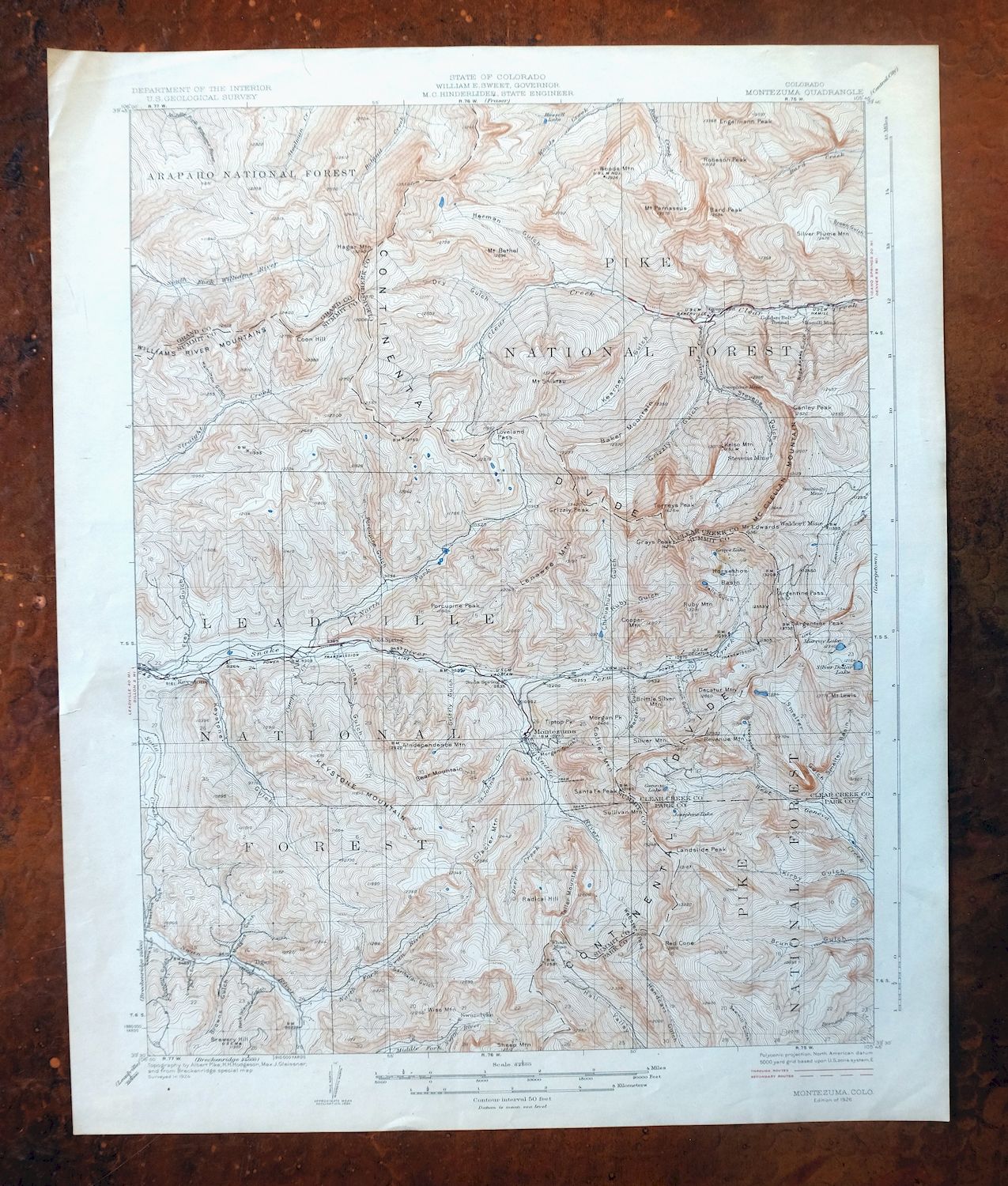
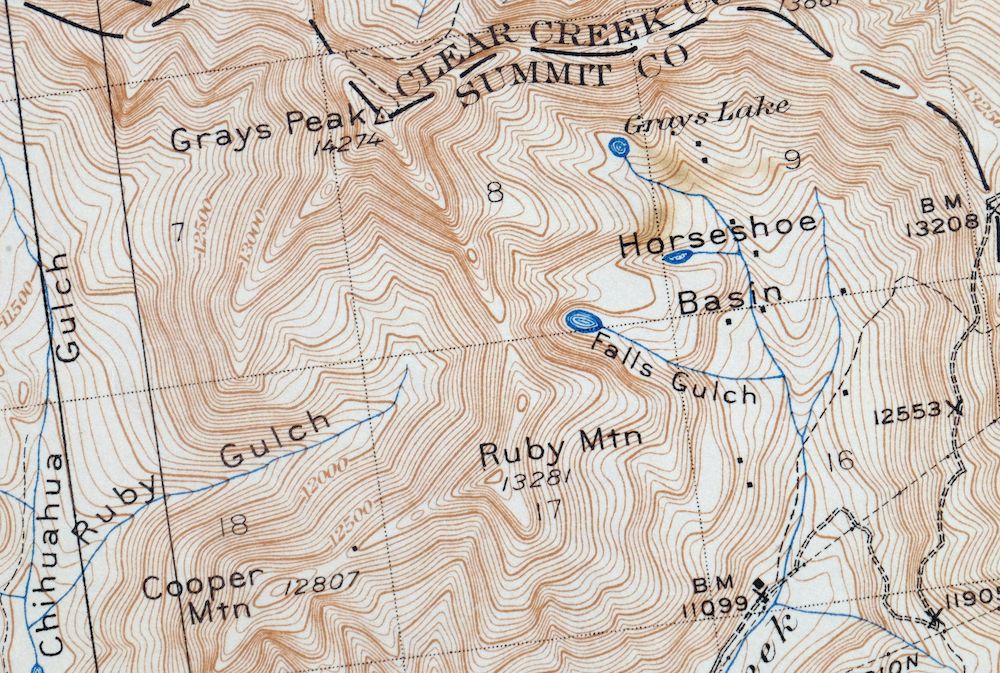
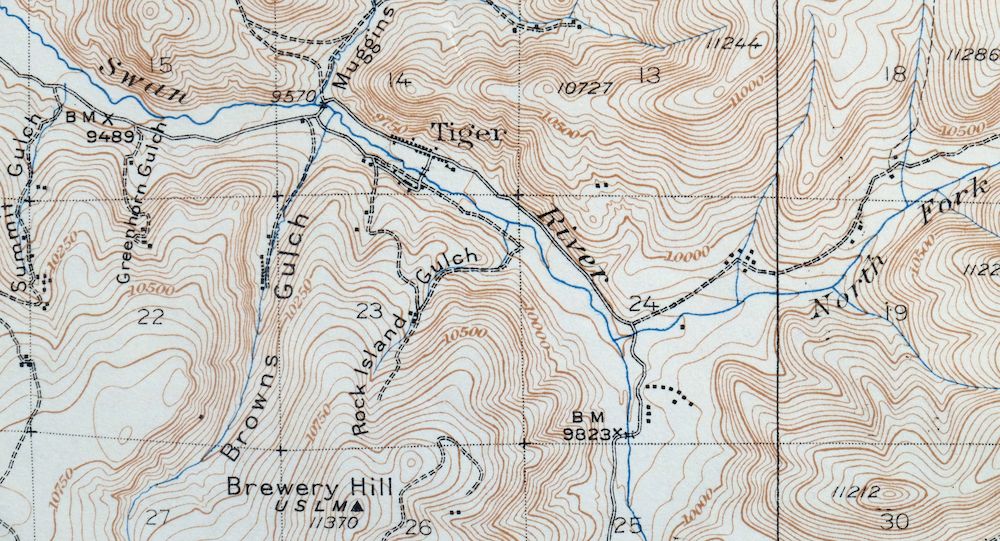
Montezuma Colorado Keystone USGS 15-Min Topographic Map 1926
$65
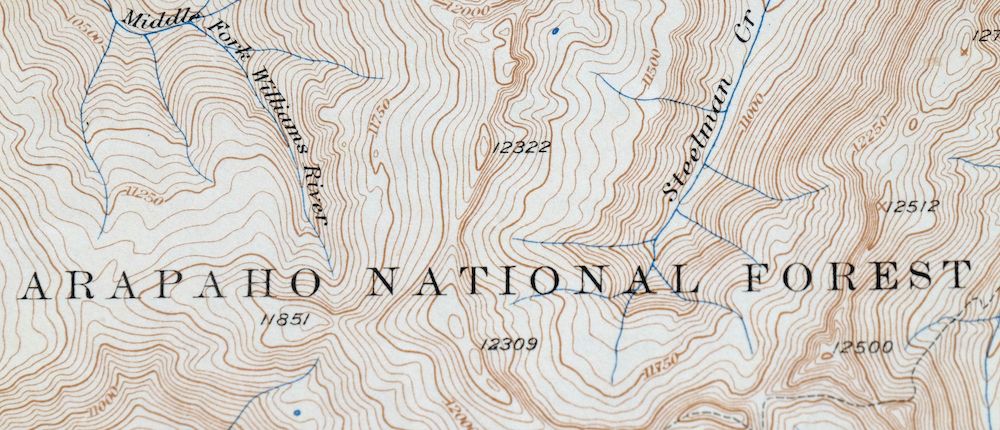
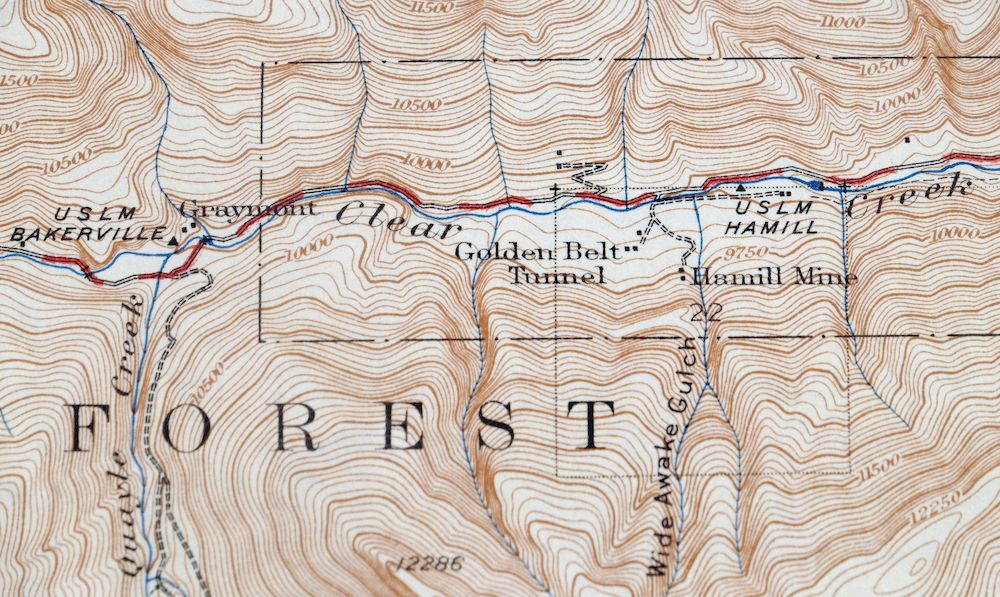
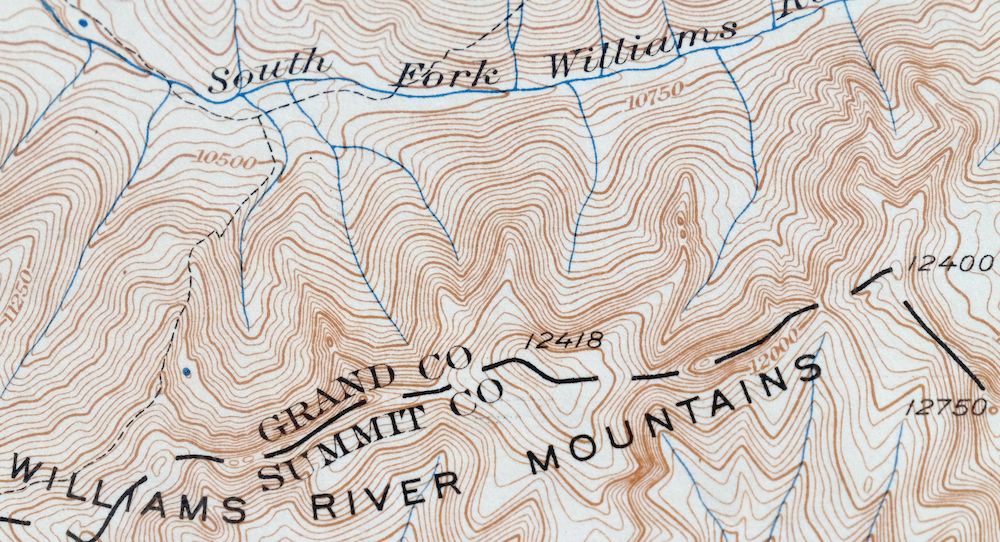
This USGS 15-minute topographic sheet is a first-year 1926 print, produced in its year of first publication and in very good condition on thick stock: lightly handled, never folded, with lightly age-toned paper and a repaired edge tear in the left collar. Drawn from a 1924 field survey with Albert Pike credited as geographer, it takes in the high country around Montezuma and Keystone in the Colorado Rockies, spanning parts of Summit, Clear Creek, Grand, and Park counties and including portions of Pike and Arapaho National Forests and the Ptarmigan Peak Wilderness. An illuminating perspective of this rugged landscape before the existence of I-70, the Eisenhower Tunnel, and the ski resorts of Loveland, A-Basin, and Keystone. The reverse carries printed reference material on reading the map.
In stock
This antique sheet is a 1926 edition of the Montezuma Colorado USGS topographic map. It is an authentic 100-year-old United States Geological Survey print in very good condition.
HOW THIS MAP CAN BE USED
In addition to making a fascinating conversation piece, this sheet would look great in a frame or on display, make a unique and prized gift for anyone interested in this area, be perfect as a reference for genealogy studies or general historical research, or fill that missing piece in your collection.
FEATURES SHOWN ON THE MAP
The Montezuma 15-minute map shows cities and towns, roads, railroads, rivers, creeks, elevation contour lines, public land survey lines, county, state, and other administrative boundaries as they existed at the time of the survey in 1924. All known structures (houses, businesses, churches, schools, barns, cabins, etc) are also shown, with exceptions in some urban areas, where only landmark buildings may be shown.
A VALUABLE HISTORICAL RECORD
Maps from the 15-minute series for the continental United States are no longer produced or printed by the USGS and original prints are becoming increasingly difficult to find. They are a valuable historical record for an area, as they contain many placenames and features that have been dropped from more recent maps.
Nearby maps
-
Georgetown Colorado Idaho Springs USGS Topo Map 1980 Vintage
$42 Add to cart -

Mount Powell Colorado Gore Range USGS Topo Map 1940 Antique
$32 Add to cart -
Hot Sulphur Springs Colorado Parshall USGS Topo Map 1963
$39 Add to cart -

Keystone Colorado USGS 7.5-Min Topographic Map 1963 Vintage
$35 Add to cart -
Georgetown Colorado Silver Plume USGS Topo Map 1962 Vintage
$33 Add to cart -

Frisco Colorado Dillon Reservoir Dillon USGS Topo Map 1973
$38 Add to cart -
Shawnee Colorado Singleton USGS Topographic Map 1972 Vintage
$39 Add to cart -
Central City Colorado Black Hawk USGS Topo Map 1964 Vintage
$32 Add to cart -

Red Cliff Colorado Vail USGS 7.5-Min Topo Map 1988 Vintage
$35 Add to cart -
Vail East Colorado USGS 7.5-Min Topographic Map 1973 Vintage
$37 Add to cart -
Bailey Colorado Will-O-The-Wisp Wandcrest USGS Topo Map 1973
$40 Add to cart -
Nederland Colorado Eldora Rollinsville USGS Topo Map 1964
$35 Add to cart -
Vail West Colorado Avon USGS 7.5-Min Topo Map 1973 Vintage
$38 Add to cart -
Eldorado Springs Colorado Arvada Boulder USGS Topo Map 1961
$37 Add to cart -
Platte Canyon Colorado South Platte USGS Topo Map 1955
$44 Add to cart -

Mount Massive Colorado USGS 7.5-Min Topo Map 1975 Vintage
$36 Add to cart -

Fort Logan Colorado Denver Bow Mar USGS Topographic Map 1941
$38 Add to cart -
Kassler Colorado Roxborough Park Louviers USGS Topo Map 1956
$48 Add to cart -

Lafayette Colorado Westminster Thornton USGS Topo Map 1967
$38 Add to cart -
Lyons Colorado USGS 7.5-Min Topographic Map 1961 Vintage
$34 Add to cart -
Highland Ranch Colorado Denver Southglenn USGS Topo Map 1949
$42 Add to cart -

Eastlake Colorado Westminster Thornton USGS Topo Map 1944
$44 Add to cart -
Eastlake Colorado Westminster Thornton USGS Topo Map 1967
$39 Add to cart -
Fitzsimons Colorado Denver Aurora USGS Topo Map 1948 Vintage
$36 Add to cart